On this page
Why a day has to end
Accounting needs a boundary: revenue belongs to a date, occupancy is measured per night, and reports compare days. The night audit is that boundary — the moment "today" becomes "yesterday" and yesterday's numbers become final. A property without a real close has reports that shift under its feet.
What the audit does, in order
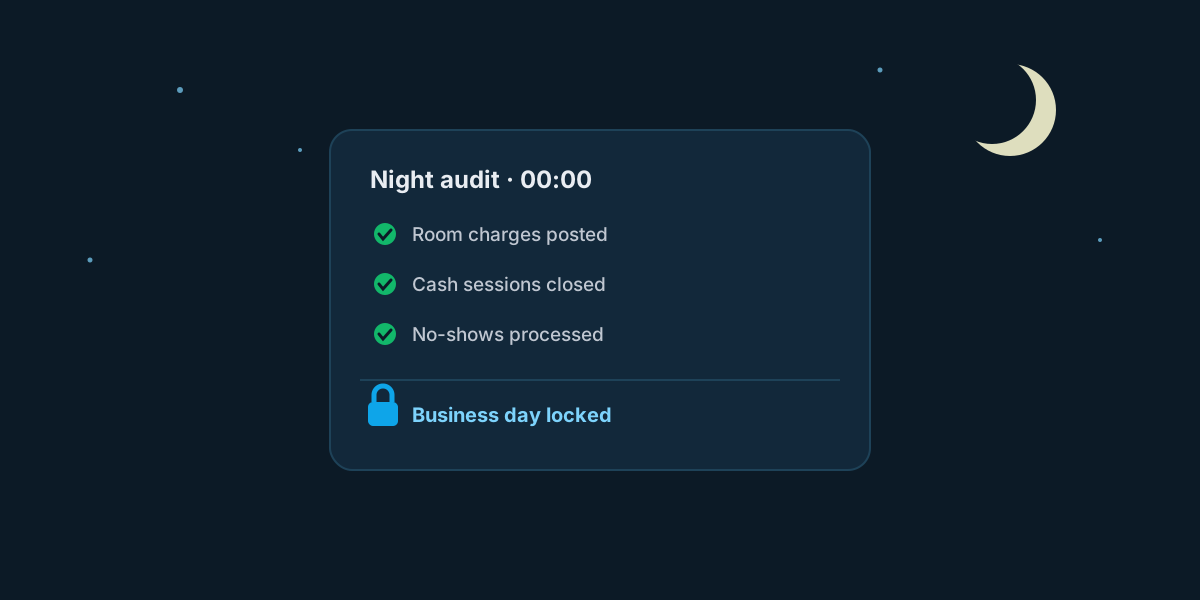
1. Pre-audit checks. Are all of today's arrivals either checked in or marked no-show? Are cashier sessions closed? Is anything unposted? A good audit refuses to close over an open question and names the blocker.
2. Room and tax posting. Every in-house stay is charged for the night — room rate, city tax, VAT — onto its folio. This is the single largest posting event of the day, and doing it by hand is where a manual operation leaks.
3. No-show processing. Reservations that never arrived are marked and charged per policy, releasing the room for tomorrow.
4. The date roll and lock. The business date advances; the closed day locks. Corrections after this point post to the new day with a trail — history is never silently rewritten.
5. The report. Occupancy, ADR, revenue by department, payments by method, and every exception — delivered to the inbox of whoever cares.
Manual vs automatic
The traditional audit was a 2am shift with a checklist. The problems are known: the auditor who posts a wrong rate at hour six of a quiet night, the skipped check, the close that simply doesn't happen on the porter's day off. An automated audit runs the same list every night, identically, and escalates only what genuinely blocks — which is what a checklist wanted to be all along.
What a locked day buys you
Trustworthy reports (yesterday's number is the same number next month), a clean handoff to accounting, and dispute resistance — when a guest questions a charge, the locked day plus the audit trail answers with facts instead of memory.